Jewelry photography is an art that requires precision, creativity, and attention to detail. Whether showcasing diamond rings, gold necklaces, silver bracelets, luxury watches, or gemstone earrings, every product image must highlight the beauty, craftsmanship, and unique details of the jewelry. In today’s competitive e-commerce industry, high-quality product photography plays a significant role in attracting customers, building trust, and increasing online sales. However, capturing a beautiful jewelry photograph is only one part of the process. Professional image editing is equally important for creating clean, attractive, and consistent product visuals. Jewelry often contains intricate designs, delicate chains, transparent gemstones, reflective surfaces, and tiny details that can be difficult to separate from their original backgrounds. This is where a manual clipping path service for jewelry images becomes essential.
What Is a Manual Clipping Path Service?
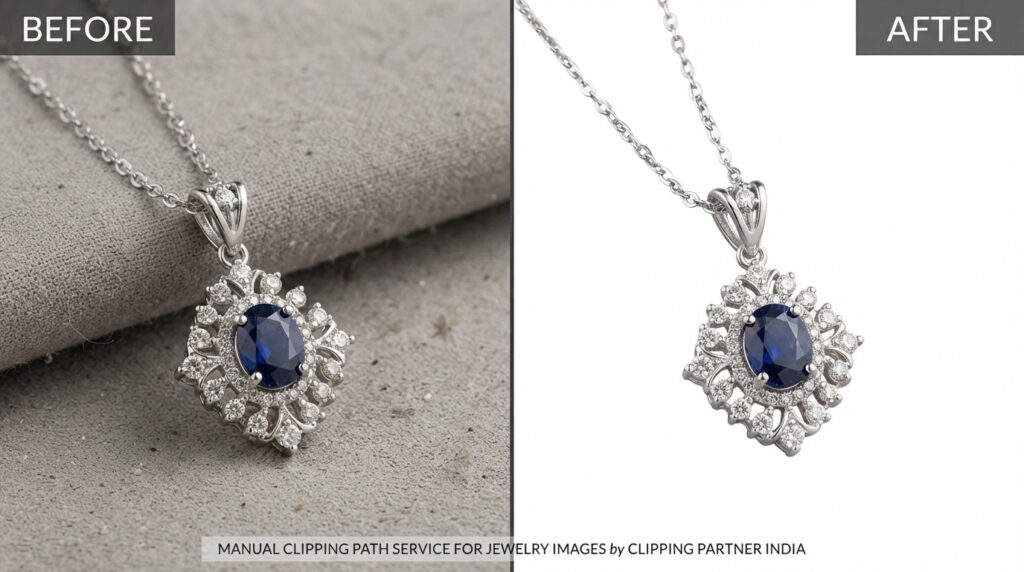
A manual clipping path service is a professional photo-editing technique used to remove or replace the background of an image by creating a precise vector path around the subject. The process is commonly performed using the Pen Tool in Adobe Photoshop. For jewelry photography, the technique requires exceptional accuracy because jewelry products often feature complicated shapes, tiny components, and intricate edges. For example, a diamond ring may contain a circular band, multiple gemstones, and small decorative elements. Similarly, a gold necklace may have delicate chains and interconnected links that require careful editing. Professional editors create paths around the relevant product areas to separate the jewelry from its original background without damaging its natural appearance.
The process generally involves opening the original jewelry photograph in Adobe Photoshop, examining the product’s shape, edges, and fine details, creating accurate paths around the jewelry using the Pen Tool, adjusting anchor points and curves for smooth outlines, and refining the selection to maintain the product’s original appearance. The result is a clean, professional product image suitable for e-commerce websites, online marketplaces, catalogs, advertisements, and social media campaigns.
Why Jewelry Images Require Manual Clipping Paths
Jewelry products are different from ordinary retail products. Their small dimensions, reflective materials, and intricate construction make background removal particularly challenging. Automatic editing software may struggle to recognize the difference between jewelry edges and the surrounding background, but manual clipping paths offer greater control over these details.
1. Intricate Jewelry Designs. Jewelry frequently includes delicate patterns, small decorative elements, and complicated shapes. A necklace, for example, may contain multiple chains, tiny pendants, and detailed metalwork. Manual clipping allows editors to follow these shapes carefully and create more accurate selections.
2. Reflective and Shiny Surfaces. Gold, silver, platinum, and polished gemstones reflect light from their surroundings. These reflections can make product edges difficult to identify. Professional editors carefully trace the visible product boundaries while preserving natural highlights and reflections.
3. Small and Delicate Components. Earrings, thin chains, gemstone settings, and bracelet links often contain extremely small details. A poorly executed selection can remove important components or leave unwanted background fragments. Manual editing helps maintain the integrity of these delicate structures.
4. Transparent and Semi-Transparent Gemstones. Diamonds and certain gemstones can contain transparent or translucent areas. These elements may require additional image-masking techniques alongside clipping paths. Combining appropriate editing methods helps preserve realistic gemstone details without creating unnatural edges.
Key Benefits of Manual Clipping Path Service for Jewelry Images
Investing in professional jewelry image editing provides several advantages for businesses that depend on attractive product photography.
1. Precise Background Removal. One of the most important benefits is accurate background separation. Manual clipping paths help editors remove distracting backgrounds while preserving the jewelry’s original shape. This creates clean product images that place greater attention on the item itself.
2. Professional Product Presentation. High-quality jewelry photographs communicate professionalism and attention to detail. A clean background helps customers focus on the product’s design, materials, and craftsmanship. This is particularly important for luxury jewelry brands that want to maintain a premium visual identity.
3. Consistent eCommerce Product Images. Online stores often display hundreds or thousands of jewelry products. Inconsistent backgrounds, image dimensions, and product positioning can make a website look unprofessional. Professional clipping path editing helps businesses maintain consistent white or transparent backgrounds, uniform product presentation, clean and accurate product outlines, standardized image dimensions, and a professional appearance across product categories.
4. Better Product Visibility. Jewelry products often contain intricate details that customers want to examine before making a purchase. Removing unnecessary background elements helps highlight important features such as gemstone settings, metal finishes, decorative patterns, and product textures.
5. Flexible Background Replacement. Once a jewelry product has been accurately isolated, the background can be changed according to marketing requirements. Businesses can use pure white backgrounds for online marketplaces, light gray backgrounds for minimalist catalogs, or soft pastel backgrounds for promotional campaigns. This flexibility makes manual clipping paths valuable for multiple marketing applications.
How Professional Manual Clipping Path Editing Works
Creating a high-quality jewelry clipping path requires technical knowledge, patience, and professional editing experience. Here is a closer look at the typical workflow.
Step 1: Image Inspection. The editing process begins with examining the original jewelry photograph. Editors identify the product’s structure, background, lighting conditions, and complicated areas that require special attention. They also determine whether the image needs a basic, complex, or advanced clipping path.
Step 2: Creating the Initial Path. Using the Pen Tool in Adobe Photoshop, editors create anchor points around the jewelry’s visible edges. The anchor points are adjusted to follow curves, corners, and irregular shapes accurately. This step requires precision because inaccurate paths can make jewelry products appear distorted.
Step 3: Refining Complex Edges. Jewelry items often have complicated structures, including thin necklace chains, decorative ring settings, small gemstone arrangements, and bracelet links. Editors refine these areas to achieve a clean and natural-looking selection.
Step 4: Separating the Background. After completing the clipping path, editors convert the path into a selection and remove the unwanted background. Depending on the project requirements, the background can be replaced with white, another solid color, or transparency.
Step 5: Quality Checking. Before delivery, the edited image should be inspected at different zoom levels. Professional quality control helps identify unwanted background pixels, rough edges, missing details, and unnatural outlines.
Step 6: Exporting the Final Image. The completed jewelry image is saved in the required format. Common delivery formats include JPEG for websites and e-commerce platforms, PNG for transparent backgrounds, PSD for editable Photoshop projects, and TIFF for specific professional photography workflows.
Different Types of Jewelry That Benefit from Clipping Path Services
Almost every jewelry category can benefit from professional background removal and precise image editing.
1. Diamond Rings. Diamond rings contain intricate gemstone arrangements, polished metal surfaces, and detailed settings. Accurate clipping paths help create clean outlines while preserving the ring’s original structure.
2. Gold and Silver Necklaces. Necklaces frequently include thin chains, pendants, and decorative elements. Professional editors must carefully handle these components to avoid unwanted gaps or missing details.
3. Earrings. Stud earrings, hoop earrings, and hanging earrings come in various shapes and sizes. Manual clipping paths help isolate each design for consistent catalog presentation.
4. Bracelets and Bangles. Bracelets may contain interconnected links, gemstones, and reflective metal surfaces. Precise selections help maintain their natural shape and appearance.
5. Luxury Watches. Watches combine metal cases, glass surfaces, straps, and small mechanical details. Professional clipping paths can separate the watch from its background for a cleaner commercial presentation.
The Importance of Clipping Paths in Jewelry eCommerce
Online jewelry shopping depends heavily on product images because customers cannot physically examine the items before purchasing. Product photography therefore becomes an important part of the online shopping experience. Professional jewelry image editing can help eCommerce businesses create a more reliable and visually appealing shopping environment.
Building Customer Confidence. Clean and consistent product images help customers understand what a business offers. Professional presentation also communicates that the brand pays attention to quality.
Improving Product Catalog Design. A jewelry catalog containing hundreds of products should maintain consistent image standards. Manual clipping path editing helps establish a uniform appearance across different product collections.
Supporting Marketing Campaigns. Isolated jewelry images can be reused across multiple promotional materials, including website banners, social media advertisements, digital catalogs, and email marketing campaigns. This allows businesses to use the same professionally edited product photographs across different marketing channels.
Common Jewelry Image Editing Mistakes to Avoid
Even a high-resolution photograph can look unprofessional when editing is performed incorrectly. Here are some common mistakes that jewelry businesses should avoid.
1. Rough and Uneven Edges. Poorly created clipping paths can leave jagged outlines around rings, necklaces, and other products. Solution: Use accurate anchor-point placement and inspect the final image at high magnification.
2. Removing Important Product Details. Over-editing can accidentally remove small chains, gemstone settings, or decorative components. Solution: Carefully inspect intricate areas before finalizing the selection.
3. Unnatural Background Removal. A poorly separated product may look like it has been cut out and pasted onto a different background. Solution: Maintain realistic edges and use appropriate shadows when necessary.
4. Excessive Retouching. Removing every natural reflection or modifying the original jewelry color can make a product photograph misleading. Solution: Preserve authentic product characteristics and avoid unnecessary alterations.
5. Inconsistent Image Dimensions. Using different image sizes and product positions can make an online catalog look disorganized. Solution: Establish consistent image specifications before beginning bulk editing.
Why Professional Jewelry Image Editing Is a Smart Investment
Professional image editing should be viewed as an investment in brand presentation rather than simply an additional production expense. A well-edited product photograph can help a business communicate quality, attract attention, and present its products more effectively. For jewelry retailers managing large product collections, outsourcing editing work can also reduce the workload of internal teams. Working with an experienced image-editing company provides access to specialized skills and scalable production support.
Clipping Partner India offers professional image-editing solutions for businesses that need clean, accurate, and consistent product photographs. Its services include clipping path, background removal, image masking, and photo retouching. Businesses looking to improve their product presentation can explore professional manual clipping path service for jewelry images to support their jewelry photography and e-commerce requirements.
Best Practices for Preparing Jewelry Images for Professional Editing
Businesses can improve the editing workflow by preparing their product photographs properly. Consider the following recommendations: capture jewelry images using high-resolution cameras, use appropriate lighting to reveal product details, avoid unnecessary objects in the background, maintain proper focus on the jewelry, and provide original, uncompressed image files whenever possible. Following these practices helps editors understand project expectations and deliver more consistent results.
The Future of Jewelry Product Photography and Image Editing
The jewelry e-commerce industry continues to evolve as brands invest in better product presentation and more engaging digital shopping experiences. Artificial intelligence, automated editing software, and advanced photography techniques are making image production faster. However, professional human editing remains valuable when product details require careful attention. Jewelry is a detail-oriented product category where small visual differences can significantly affect presentation. Manual clipping paths provide precise control over product outlines, while image masking and retouching help address more complicated visual requirements. In the coming years, businesses will increasingly combine automated tools with professional editing workflows to achieve both efficiency and quality. Brands that prioritize accurate, consistent, and attractive product photography will be better positioned to create a strong visual identity in competitive online markets.
Conclusion
Professional jewelry photography requires more than a good camera and attractive lighting. Accurate image editing is essential for presenting products clearly, maintaining visual consistency, and creating a professional online shopping experience. A manual clipping path service for jewelry images provides the precision needed to separate complicated jewelry designs from unwanted backgrounds while preserving their original shapes and details. From diamond rings and gold necklaces to luxury watches and gemstone earrings, professional clipping path editing helps businesses create clean and attractive product photographs for websites, catalogs, advertisements, and online marketplaces. By choosing an experienced image-editing provider, maintaining consistent image standards, and prioritizing product accuracy, jewelry brands can strengthen their visual presentation and build customer confidence.




Pingback: High-Quality Photo Retouching for E-commerce Products: A Complete Guide to Creating Stunning Product Images - Car Photo Editing Service Provider | Car Photo Editing Lab