Photography is more than capturing a beautiful moment. It also involves presenting images in a way that communicates quality, creativity, and professionalism. Whether photographing products, weddings, fashion, portraits, jewelry, real estate, or commercial campaigns, photographers often spend considerable time refining their images before delivering them to clients. However, professional post-production can be expensive and time-consuming, especially when workloads increase.
This is where affordable Photoshop editing services for photographers become valuable. Outsourcing image editing to an experienced photo editing team allows photographers to maintain professional standards without spending hours completing repetitive Photoshop tasks. It also helps reduce operational costs, manage large projects, and focus more attention on photography, client relationships, and business development.
Affordable editing does not necessarily mean compromising quality. With the right editing partner, photographers can receive carefully retouched, consistent, and commercially ready images at a reasonable price. Understanding the available services, their benefits, and the factors that influence editing costs can help photographers make better decisions.
Why Professional Photo Editing Matters in Photography
Even a well-planned photography session may produce images that need additional adjustments. Lighting conditions, distracting backgrounds, unwanted reflections, dust, incorrect colors, and minor imperfections can affect the final appearance of a photograph.
Professional editing improves these details while preserving the original subject and the photographer’s creative vision.
For commercial photographers, polished images help businesses present products more effectively. Portrait photographers use retouching to create refined photographs while maintaining natural skin texture. Wedding photographers may need color correction and consistent editing across hundreds of images.
Professional post-production can help photographers:
• Improve image clarity, brightness, and overall appearance.
• Correct exposure and white balance.
• Remove distracting objects and unwanted backgrounds.
• Enhance product colors and fine details.
• Retouch minor imperfections without creating an artificial appearance.
• Maintain a consistent visual style across an entire collection.
• Prepare photographs for printing, websites, catalogs, and social media.
These improvements make editing an essential part of the photography workflow rather than simply an optional finishing step.
What Are Affordable Photoshop Editing Services for Photographers?
Affordable Photoshop editing services involve outsourcing selected image editing tasks to professional editors at competitive rates. Instead of completing every adjustment independently, photographers can send their images to an editing provider that handles specific post-production requirements.
The services can range from simple image adjustments to complex manual Photoshop work. Pricing usually depends on the editing technique, image complexity, quantity, turnaround time, and required output quality.
For example, removing a plain background from a simple product photograph generally requires less work than carefully isolating a transparent glass object or retouching a detailed piece of jewelry.
A professional editing partner should understand that every photography project has different requirements. The goal is not to apply the same effect to every image but to deliver results that match the subject, intended use, and creative direction.
Popular Photoshop Editing Services Photographers Can Outsource
Background Removal and Clipping Path
Background removal is one of the most frequently requested Photoshop editing services. It involves separating the main subject from its original background so that the image can be placed on a clean white, transparent, or customized background.
Clipping path editing is particularly useful for products with clear and defined edges, such as shoes, bags, furniture, and electronic devices.
Photographers may need background removal when preparing images for:
• E-commerce product listings.
• Online advertising campaigns.
• Printed catalogs and brochures.
• Commercial product presentations.
• Marketplace and retail websites.
Accurate edge selection is important because rough outlines, missing details, or unnatural cutouts can reduce the quality of the final photograph.
Photo Retouching
Photo retouching improves the appearance of an image by correcting unwanted imperfections and enhancing important details. The editing process depends on the type of photography and the desired result.
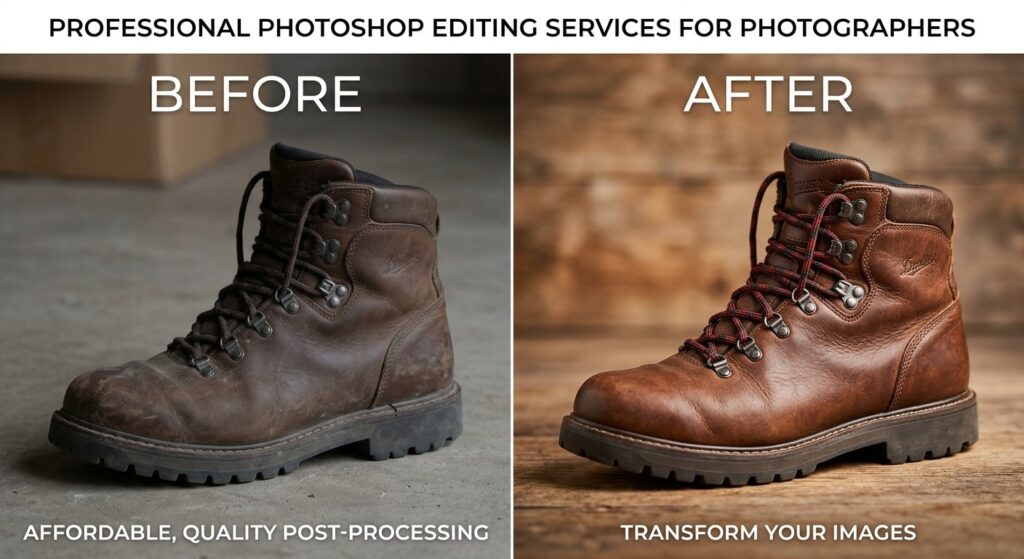
For product photography, retouching may involve removing dust, scratches, fingerprints, and surface marks. In portrait photography, it may include subtle skin refinement, temporary blemish removal, and adjustments to lighting and contrast.
Professional retouching should improve the photograph without making it look unrealistic. Natural texture, accurate colors, and the original character of the subject should remain intact.
Color Correction and Color Adjustment
Accurate color reproduction is essential for many photography projects. Incorrect white balance, inconsistent lighting, and camera settings can produce images that do not accurately represent the original subject.
Color correction helps balance exposure, temperature, saturation, and contrast. It is especially important for product photographers who need consistent colors across multiple images.
For example, an online clothing store expects a blue shirt to look reasonably consistent across different product photographs. A jewelry photographer may need to preserve the natural appearance of gold, silver, and gemstones.
Professional color correction helps create a more unified and reliable visual presentation.
Image Masking
Image masking is an advanced editing method used to separate subjects with complicated edges. It is especially useful when ordinary clipping paths cannot provide the required level of accuracy.
Photographers often use image masking for:
• Hair and fur.
• Transparent glass products.
• Fine fabric details.
• Feathers and soft edges.
• Objects with complex textures.
Carefully applied masking techniques help preserve delicate details while allowing editors to remove or replace backgrounds.
Ghost Mannequin Editing
Ghost mannequin editing is widely used in fashion and clothing photography. It combines multiple photographs of a garment to create the appearance of clothing displayed without a visible mannequin or model.
This technique helps showcase the shape, structure, fitting, and inner details of clothing products.
Fashion photographers and online clothing retailers may outsource ghost mannequin editing to create professional product images for websites, catalogs, and advertising materials.
Shadow Creation and Reflection Effects
Product photographs sometimes appear flat when objects do not have natural-looking contact with their background. Shadow creation adds depth and helps products appear more realistic.
Common shadow effects include:
• Drop shadow for a simple dimensional appearance.
• Natural shadow for realistic product presentation.
• Reflection shadow for glossy surfaces.
• Contact shadow to create a grounded appearance.
• Long shadow for selected creative and promotional designs.
The appropriate effect depends on the product, lighting direction, background, and intended visual style.
How Outsourcing Photoshop Editing Helps Photographers Save Money
Hiring a full-time photo editor may not be practical for every photography business. Independent photographers, small studios, and seasonal businesses often experience changing workloads. Some months involve numerous photography projects, while other periods may be relatively quiet.
Outsourcing offers a flexible alternative.
Reduce Operational Expenses
A dedicated in-house editing team may require salaries, equipment, software subscriptions, training, and ongoing management. Outsourcing can reduce some of these expenses because photographers pay for the editing work they need.
This arrangement is especially useful for photographers who receive large assignments occasionally rather than maintaining a constant editing workload.
Save Time on Repetitive Work
Editing hundreds of photographs individually can take considerable time. Background removal, color correction, resizing, and basic retouching are common tasks that can be outsourced.
This gives photographers more time to:
• Plan upcoming photography sessions.
• Communicate with clients.
• Develop creative concepts.
• Manage marketing activities.
• Build relationships with commercial customers.
• Accept additional photography assignments.
The time saved through outsourcing can become a valuable business resource.
Manage Large Projects More Efficiently
A professional editing provider may be able to process large batches of images according to agreed project requirements. This can help photographers manage product catalogs, wedding collections, fashion campaigns, and other demanding assignments.
However, photographers should confirm the provider’s capacity and delivery schedule before sending a large project.
How to Choose an Affordable Photo Editing Partner
Finding a low-cost editing provider is easy, but identifying one that consistently delivers reliable results requires careful evaluation. Price is important, but it should not be the only deciding factor.
Examine the Portfolio
A provider’s portfolio offers useful information about its editing skills and attention to detail. Look for examples related to your photography category.
For instance, a product photographer should examine product cutouts, realistic shadows, and color correction samples. A fashion photographer should review clothing retouching and ghost mannequin examples.
Request a Sample Edit
Before outsourcing a large assignment, send a small number of sample photographs. Explain the expected editing style and provide reference images when necessary.
Evaluate the sample based on:
• Accuracy of subject selection.
• Natural-looking retouching.
• Color consistency.
• Edge quality.
• Background cleanliness.
• Overall presentation.
A sample edit helps both sides understand the requirements before committing to a larger project.
Compare Pricing Carefully
Different providers use different pricing structures. Some charge per image, while others offer packages for bulk editing.
When comparing quotes, consider the complexity of the task rather than looking only at the lowest price. A simple background removal task and advanced jewelry retouching should not be expected to cost the same.
Also clarify whether revisions, additional adjustments, and urgent delivery involve extra charges.
Check Communication and File Delivery
Clear communication is essential for successful outsourcing. A reliable editing partner should be able to understand instructions, follow references, and respond to feedback.
Discuss file formats, image dimensions, naming conventions, folder organization, and delivery methods before beginning the project.
These details can prevent unnecessary corrections and make the workflow more efficient.
How to Maintain Consistent Editing Quality Across Projects
Consistency is particularly important for photographers working with commercial clients. A collection of images should look like part of the same project, even when photographs were captured under different lighting conditions.
Developing a clear editing guideline can make this process easier.
Create an Editing Reference Guide
A reference guide should explain the visual style and technical requirements expected from the editor.
It may include:
• Preferred brightness and contrast levels.
• Background color requirements.
• Shadow direction and intensity.
• Retouching preferences.
• Color correction references.
• Final image dimensions.
• Required file formats.
Providing these details reduces uncertainty and helps editors deliver consistent results.
Organize Images Before Outsourcing
Proper file organization makes large editing assignments easier to manage. Separate images into folders based on project, product category, or editing requirement.
Use clear filenames and include written instructions for special requests. This helps prevent confusion when multiple image batches are being processed.
Review Completed Images
Before delivering edited photographs to clients, review the final files. Check important details such as edge accuracy, unwanted marks, color balance, image dimensions, and overall consistency.
A quality-control process can help identify small problems before they become larger client issues.
Who Can Benefit from Affordable Photoshop Editing Services?
Professional outsourcing is not limited to large commercial photography companies. Photographers with different business models can benefit from flexible editing support.
E-commerce photographers: They often work with large product collections and need consistent backgrounds, accurate colors, and polished images.
Wedding photographers: They may outsource selected retouching and image adjustments to manage busy seasons and large photo collections.
Fashion photographers: They can use clothing retouching, ghost mannequin editing, and background adjustments for commercial campaigns.
Jewelry photographers: They may require detailed retouching to remove dust, improve reflections, and highlight the appearance of precious materials.
Real estate photographers: They can benefit from exposure correction, image enhancement, and selected object-removal tasks.
Advertising and commercial photographers: They often need advanced image manipulation and polished visuals for promotional campaigns, brochures, and digital advertisements.
The right editing arrangement depends on the photographer’s workload, budget, creative requirements, and client expectations.
Tips for Getting Better Results While Keeping Editing Costs Under Control
Affordable editing is most effective when photographers communicate clearly and organize their projects properly.
Consider these practical tips:
• Send high-quality original images instead of heavily compressed files.
• Provide clear instructions for every editing requirement.
• Share visual references to demonstrate the expected results.
• Group similar editing tasks into batches where practical.
• Agree on the output format and delivery deadline in advance.
• Test a small batch before submitting a large assignment.
• Avoid unnecessary revisions by confirming requirements early.
• Build a long-term working relationship with a provider whose quality meets your standards.
These simple steps can reduce misunderstandings, improve efficiency, and help control the overall cost of post-production.
Why the Right Editing Partner Makes a Difference
An effective editing partner should do more than apply Photoshop techniques. It should understand the importance of image presentation, turnaround time, consistency, and client expectations.
Photographers need editing support that complements their creative work rather than changing the original vision of a project. This requires clear communication, attention to detail, and the ability to handle different image categories.
When choosing a provider, consider experience, sample quality, communication, pricing transparency, and the ability to manage your expected image volume.
Photographers looking for dependable post-production support can explore affordable Photoshop editing services for photographers from Clipping Partner India. Reviewing the available services and discussing project requirements can help determine whether the editing options match a photographer’s workflow and budget.
Conclusion
Affordable Photoshop editing services for photographers provide a practical way to improve image quality, manage busy workloads, and control post-production expenses. From background removal and clipping paths to advanced retouching, image masking, ghost mannequin editing, and color correction, professional editing support can help photographers prepare images for different commercial and creative purposes.
The best outsourcing decision is not necessarily the one with the lowest price. It is the one that balances cost, quality, communication, turnaround time, and consistency. By reviewing portfolios, requesting sample edits, organizing project files, and providing clear instructions, photographers can build a reliable editing workflow.
Whether you are an independent photographer, a growing studio, or a commercial photography business, the right editing partnership can free up valuable time and help you focus on producing better photographs and developing stronger client relationships.