
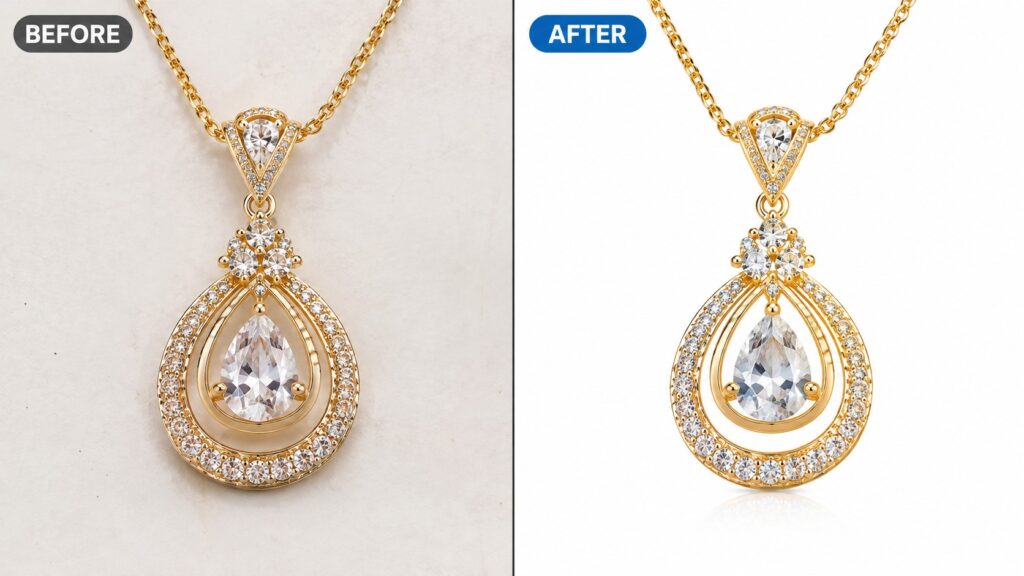
Jewelry is one of the most visually demanding products to sell online. Whether it is a diamond engagement ring, a gold necklace, a pair of elegant earrings, or a luxury bracelet, customers want to see every detail before making a purchase. Unlike shopping in a physical store, online buyers cannot touch, feel, or examine jewelry from different angles. Their purchasing decisions depend heavily on product photographs.
This is where professional jewelry photo retouching for online stores becomes essential. High-quality jewelry photography combined with professional editing can transform ordinary product images into attractive, realistic, and sales-focused visuals. From removing unwanted reflections to enhancing gemstones, correcting metal colors, and improving sharpness, professional retouching helps jewelry brands present their products in the best possible way.
In today’s competitive eCommerce market, attractive product photography is more than a design choice. It is an important part of building customer confidence, improving product presentation, and creating a consistent brand identity.
This article explores the importance of jewelry photo retouching, the techniques professionals use, common editing challenges, and how online jewelry businesses can benefit from high-quality image editing.
Why Professional Jewelry Photo Retouching Matters for Online Businesses
Jewelry products often contain small details, reflective surfaces, intricate patterns, and precious stones that require careful attention. Even an expensive camera cannot always capture every detail perfectly. Lighting conditions, dust, fingerprints, unwanted reflections, and background distractions can affect the final photograph.
Professional jewelry retouching helps solve these problems while maintaining the product’s natural appearance.
Here are some important reasons why jewelry businesses should invest in professional image editing:
• Improves product appearance: Professional editing makes jewelry look clean, polished, and visually appealing.
• Highlights important details: Fine textures, gemstone cuts, metal finishes, and decorative elements become easier to see.
• Creates consistent product images: Every product can follow the same color, lighting, and background standards.
• Builds customer confidence: Clear and realistic product photographs help customers understand what they are purchasing.
• Supports brand identity: Consistent, high-quality images create a professional impression across online stores and marketing platforms.
• Improves visual engagement: Attractive product images encourage visitors to explore product listings and learn more about available collections.
For online jewelry retailers, these improvements can make a meaningful difference in how products are perceived.
The Most Important Jewelry Photo Retouching Techniques
Professional jewelry image editing involves several specialized techniques. The goal is not simply to make a photograph look attractive but to present the actual product accurately and professionally.
1. Dust and Scratch Removal
Dust particles, fingerprints, small scratches, and unwanted marks are common problems in jewelry photography. These imperfections may not be noticeable when viewing the actual product, but they can become highly visible in close-up photographs.
Professional retouchers carefully remove these distractions while preserving the original texture and surface characteristics.
This process is particularly important for:
• Diamond rings and engagement rings.
• Gold and silver necklaces.
• Luxury watches and bracelets.
• Gemstone earrings.
• Handmade jewelry collections.
Careful cleaning creates a polished presentation without making the jewelry appear artificial.
2. Gemstone Enhancement
Gemstones are among the most important visual elements in jewelry photography. Diamonds, emeralds, rubies, sapphires, and other precious stones attract attention through their colors, brilliance, and unique cuts.
However, gemstones can sometimes appear dull or dark in photographs because of poor lighting or incorrect camera settings.
Professional retouching can improve their appearance through:
• Enhancing natural brightness and brilliance.
• Improving gemstone color accuracy.
• Adjusting contrast and clarity.
• Highlighting individual facets and cuts.
• Reducing distracting reflections.
The objective is to emphasize the gemstone’s natural beauty without changing its actual color or misrepresenting its quality.
3. Metal Color Correction
Gold, silver, platinum, and rose gold have different reflective properties. Capturing their accurate colors can be challenging, especially when surrounding objects or lighting conditions create unwanted color casts.
Professional color correction helps maintain realistic metal tones.
For example:
• Yellow gold should maintain a rich and natural golden appearance.
• White gold should look clean without losing its metallic details.
• Rose gold should retain its warm pinkish tone.
• Silver should appear bright and neutral rather than dull or overly gray.
Accurate color presentation is essential because customers expect the jewelry they receive to look similar to the product images displayed online.
4. Reflection and Highlight Control
Jewelry surfaces are highly reflective. During photography, they can capture unwanted reflections from cameras, lights, surrounding objects, and the photographer’s environment.
These reflections may distract viewers from the actual product.
Professional retouchers carefully reduce distracting reflections while preserving natural highlights that demonstrate the material’s shine and shape.
This technique is especially valuable for polished gold jewelry, diamond rings, luxury watches, and silver accessories.
5. Background Cleaning and Replacement
A clean background helps jewelry stand out and gives product listings a consistent appearance.
Many eCommerce businesses prefer pure white backgrounds because they create a simple, distraction-free product presentation. Other brands choose soft gray, beige, black, or lifestyle backgrounds to communicate a particular visual identity.
Background editing may include:
• Removing unwanted objects.
• Cleaning uneven background areas.
• Replacing distracting backgrounds.
• Creating pure white backgrounds.
• Maintaining natural product edges.
• Adjusting background brightness and contrast.
The right background depends on the brand’s identity, marketplace requirements, and product photography strategy.
6. Sharpness and Detail Enhancement
Jewelry often contains tiny design elements that customers want to examine closely. A slightly blurry photograph can hide important details and reduce the perceived quality of a product.
Professional sharpening improves the visibility of important features without creating unnatural edges or excessive digital noise.
It can help highlight:
• Diamond cuts and gemstone facets.
• Engraved patterns.
• Intricate chain links.
• Decorative metalwork.
• Small stones and settings.
A balanced approach is important because excessive sharpening can make jewelry appear rough or unrealistic.
Common Challenges in Jewelry Product Photography
Jewelry photography is more complicated than photographing many ordinary consumer products. Its reflective materials, small dimensions, and intricate construction create several technical challenges.
Reflective Metal Surfaces
Gold, silver, and platinum reflect their surroundings. Even small lighting mistakes can produce distracting highlights, dark patches, or unwanted color variations.
Professional editing helps balance these reflections while maintaining realistic surface details.
Small and Intricate Designs
Many jewelry products include delicate chains, tiny stones, detailed engravings, and complex settings. These features require precise editing to avoid damaging important product details.
Maintaining Accurate Colors
Color accuracy is especially important for precious metals and gemstones. Incorrect color adjustments can create unrealistic expectations and potentially lead to customer dissatisfaction.
Removing Unwanted Shadows
Hard or uneven shadows can make jewelry appear less attractive. Professional retouching can soften distracting shadows while maintaining natural depth and dimension.
Maintaining Realistic Texture
Over-editing can make jewelry appear artificial. A professional retoucher must understand how to improve an image without removing the natural characteristics that make the product unique.
How Professional Jewelry Photo Retouching Improves eCommerce Sales
Product photography plays a major role in online shopping because customers use images to evaluate products before purchasing.
A well-retouched jewelry photograph can communicate quality, craftsmanship, and attention to detail more effectively than an ordinary image.
Here are several ways professional editing supports online retail businesses.
Creates a Strong First Impression
Customers often form their first impression of an online jewelry brand through its product images. Clean, attractive photographs can make a collection appear more organized and professional.
When visitors see consistent, high-quality visuals, they may feel more comfortable exploring the store.
Helps Customers Understand Product Details
Detailed images allow customers to examine the design, material appearance, gemstone arrangement, and finishing of a product.
This is especially important when selling expensive or premium jewelry online.
Builds Trust Through Consistency
Imagine visiting an online jewelry store where every product has different lighting, background colors, and image quality. Such inconsistency can make the website appear unprofessional.
Consistent retouching creates a unified shopping experience and helps establish a recognizable brand identity.
Supports Marketing Campaigns
Professionally edited jewelry images can be used across multiple marketing channels, including:
• eCommerce product pages.
• Facebook and Instagram advertisements.
• Pinterest product pins.
• Email marketing campaigns.
• Digital catalogs and brochures.
• Promotional banners and website sliders.
A consistent image-editing workflow allows businesses to reuse product photographs across different platforms without sacrificing visual quality.
Best Practices for Jewelry Images on Online Marketplaces
Different online marketplaces have their own product image guidelines. However, several general practices can help jewelry businesses maintain professional product presentations.
Use High-Resolution Product Photography
High-resolution images allow customers to examine fine details. They also provide greater flexibility when creating close-up images and promotional graphics.
Maintain a Consistent Background
Choose a background style that matches the marketplace requirements and brand identity. White backgrounds are particularly useful for standard product listings.
Show Multiple Product Angles
A single photograph may not communicate every important feature of a jewelry item.
Consider including:
• Front-facing product images.
• Side views showing thickness and structure.
• Close-up gemstone photographs.
• Detail shots of clasps and settings.
• Lifestyle photographs showing how the jewelry looks when worn.
Maintain Accurate Product Colors
Avoid excessive saturation, unrealistic brightness, or dramatic color changes. The final image should represent the actual product as closely as possible.
Optimize Image File Sizes
Large image files can affect website loading performance. Compress images appropriately while maintaining sufficient visual quality.
Use descriptive image file names and relevant alternative text to support image accessibility and search engine understanding.
Why Professional Jewelry Photo Retouching Is Better Than Basic Editing
Basic photo editing applications are useful for simple adjustments, but professional jewelry retouching often requires more advanced skills.
Jewelry contains complex reflective surfaces and delicate structures that cannot always be corrected with automatic filters.
Professional retouchers understand how to work with:
• Advanced masking and selection techniques.
• Precise color correction.
• Detailed dust and scratch removal.
• Reflection and highlight adjustments.
• Natural shadow enhancement.
• High-resolution product finishing.
They also understand the importance of maintaining the original product’s appearance.
For jewelry brands handling hundreds or thousands of product photographs, professional editing can provide a more consistent workflow and reduce the time spent correcting images individually.
Businesses looking for reliable image enhancement can explore professional photo retouching services to improve their product photography and create polished visuals for online marketing.
How to Choose the Right Jewelry Photo Retouching Service Provider
Selecting the right image editing partner is an important decision for jewelry retailers, photographers, and eCommerce businesses.
Not every photo editing company has the experience required to handle delicate jewelry images.
Before choosing a provider, consider the following factors.
1. Review the Company’s Portfolio
Look for examples of jewelry editing work, including diamond enhancement, metal color correction, background cleaning, and detailed retouching.
A portfolio can help you understand the provider’s editing quality and attention to detail.
2. Check Editing Accuracy
Professional editing should improve the photograph without changing the actual product’s appearance.
Pay attention to gemstone colors, metal textures, natural reflections, and fine details.
3. Ask About Bulk Editing Capabilities
Large jewelry businesses may need hundreds of images edited within a specific period.
Choose a provider that can manage bulk orders while maintaining consistent quality.
4. Compare Pricing and Turnaround Time
Affordable pricing is important, but the cheapest service is not always the best choice.
Consider the balance between image quality, delivery time, revision policies, and overall value.
5. Request a Sample Edit
A sample edit can help you evaluate the provider’s skills before placing a large order.
It also gives you an opportunity to communicate your preferred background, color style, and retouching requirements.
6. Check Communication and Support
A reliable editing partner should understand your instructions, respond to questions, and provide updates when necessary.
Clear communication reduces misunderstandings and makes long-term collaboration easier.
The Future of Jewelry Photo Editing for Online Retail
The eCommerce industry continues to evolve, and customers increasingly expect detailed, professional, and visually consistent product photography.
Jewelry brands are also adopting new photography and image-editing approaches to improve their online shopping experiences.
Some important developments include:
AI-assisted editing: Artificial intelligence can help automate certain repetitive tasks, such as background removal, basic adjustments, and image organization. However, complex jewelry details often require careful human review.
High-resolution product images: Better image quality allows shoppers to examine gemstone settings, metal textures, and intricate craftsmanship.
Consistent brand photography: More businesses are adopting standardized editing workflows to maintain the same visual style across product collections.
Lifestyle product presentation: Jewelry brands increasingly combine clean product photographs with lifestyle imagery to communicate style and product appeal.
Interactive product experiences: Multiple product angles, zoom features, and 360-degree views help customers explore products more closely.
Although technology continues to improve, professional judgment remains important for preserving realistic product details and maintaining visual accuracy.
Final Thoughts
Professional jewelry photo retouching for online businesses is an essential part of creating attractive, trustworthy, and consistent product photography. From removing dust and scratches to enhancing gemstones, correcting metal colors, controlling reflections, and improving background presentation, professional editing helps jewelry products look their best.
For photographers, jewelry designers, and eCommerce retailers, investing in high-quality image retouching can strengthen brand presentation and improve the overall customer experience.
The most effective jewelry photographs are not necessarily the most heavily edited. They are the ones that balance visual beauty with realistic product representation.
By choosing an experienced photo editing partner, maintaining consistent image standards, and focusing on accurate product details, online jewelry businesses can create a stronger visual identity and present their collections more professionally in an increasingly competitive digital marketplace.