As fashion e-commerce continues to grow, presenting products professionally has become increasingly important for winning customer trust.
Shoppers cannot physically touch, examine, or try on clothing before placing an order. Instead, they depend on product photographs to understand the garment’s appearance, shape, fit, texture, and quality. This makes professional product photography and image editing essential for clothing brands that want to build customer confidence and increase online sales.
One popular technique used by fashion retailers, online clothing stores, manufacturers, and apparel brands is ghost mannequin photography. It creates the appearance of clothing being worn by an invisible model, allowing customers to see the garment’s natural shape without distractions from a person or mannequin.
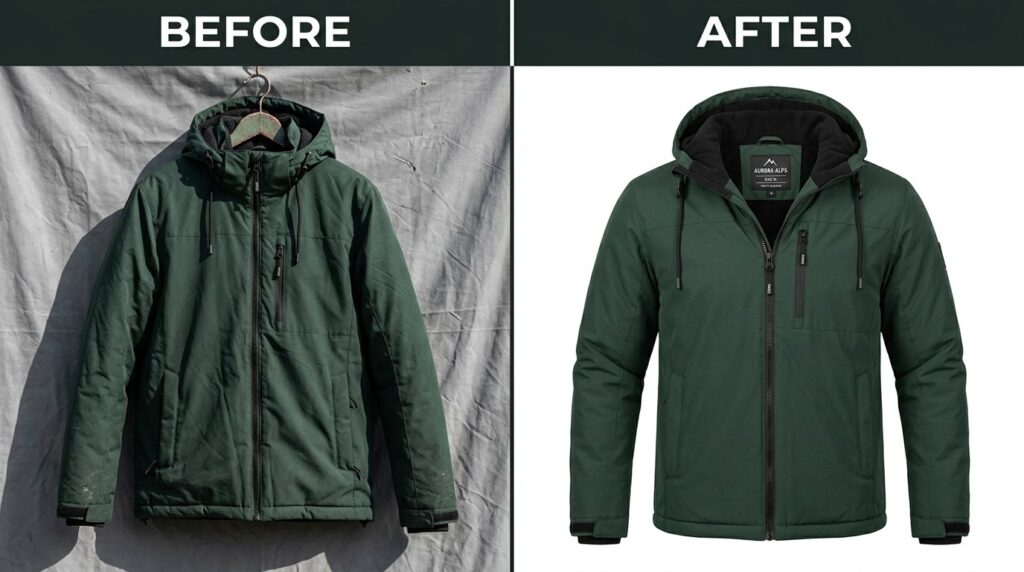
However, capturing the photographs is only part of the process. Professional editing is necessary to remove the mannequin, combine multiple images, correct imperfections, and create a clean, realistic presentation. This is where ghost mannequin editing for clothing brands becomes especially valuable.
Whether a business sells shirts, dresses, jackets, jeans, sweaters, or luxury fashion products, properly edited ghost mannequin images can help communicate product details while maintaining a consistent brand identity.
What Is Ghost Mannequin Editing?
Ghost mannequin editing is a professional photo-editing technique used to make clothing appear as though it is being worn by an invisible person. Photographers usually capture garments on a mannequin from different angles. They then photograph additional areas, such as the inside collar or neckline, without the mannequin.
During post-production, editors remove the mannequin and combine the necessary image sections to create a natural-looking, hollow appearance.
The final photograph displays the clothing’s shape and construction without showing the mannequin, model, or unnecessary background elements.
For example, a shirt photographed on a mannequin may clearly show its sleeves and front design, but the mannequin can block the inside neckline. An editor uses an additional photograph of the collar area to reconstruct the hidden section. The result is a realistic product image that displays both the exterior and interior details.
This technique is particularly useful for:
• Fashion and apparel brands
• Online clothing retailers
• Wholesale garment suppliers
• Clothing manufacturers
• Fashion marketplaces
• Luxury apparel businesses
• Sportswear and activewear companies
Why Clothing Brands Need Ghost Mannequin Editing
Professional product images can influence how customers perceive a clothing brand. Poorly presented garments may appear unattractive or misleading, even when the actual products are high quality.
Ghost mannequin editing solves several common presentation problems and helps brands create professional product photographs.
Shows the Natural Shape of Clothing
Flat-lay photography can sometimes make garments look lifeless. A ghost mannequin image gives clothing a more three-dimensional appearance by showing how it naturally fits around the shoulders, chest, waist, and sleeves.
Customers can understand the garment’s overall structure without a visible model distracting them.
Keeps the Focus on the Product
When a model wears clothing, attention may be divided between the person and the garment. A ghost mannequin presentation removes this distraction.
The viewer can concentrate on:
• Fabric texture and material
• Neckline and collar design
• Sleeve length and construction
• Buttons, zippers, and stitching
• Overall garment shape
• Design patterns and decorative details
This product-focused presentation is useful for brands that want customers to evaluate clothing based on its actual features.
Creates a Consistent Brand Appearance
Consistency is important when displaying hundreds or thousands of clothing products. Different photography styles, mannequin colors, backgrounds, and lighting conditions can make an online store look unorganized.
Professional ghost mannequin editing helps standardize product images by maintaining similar positioning, proportions, background colors, and visual presentation.
A consistent product gallery creates a more polished shopping experience and strengthens brand recognition.
Helps Customers Understand Garment Construction
A front-facing photograph may not reveal every important detail of a garment. Necklines, inner labels, back panels, and shoulder construction can all influence purchasing decisions.
The ghost mannequin technique allows editors to combine multiple photographs and reveal areas that might otherwise remain hidden.
This provides customers with a clearer understanding of the clothing before purchasing.
How the Ghost Mannequin Editing Process Works
Creating a convincing invisible mannequin effect requires careful photography and professional image-editing skills. Each stage contributes to the final result.
1. Photographing Clothing on a Mannequin
The process begins with properly photographing the garment on a mannequin. The clothing should be arranged carefully so that it looks natural and does not contain unnecessary wrinkles or folds.
Photographers generally capture the front, back, and side views depending on the product’s requirements.
Important photography considerations include:
• Use consistent lighting throughout the photoshoot.
• Position the garment correctly on the mannequin.
• Keep the clothing free from unnecessary wrinkles.
• Make sure important product details are visible.
• Capture additional images of hidden areas when necessary.
• Maintain consistent camera angles and proportions.
Good source photography makes the editing process more accurate and efficient.
2. Removing the Mannequin
After photography, editors use professional image-editing software to separate the garment from the mannequin.
They carefully create selections around the clothing while preserving its original edges, shape, and fabric details.
This step requires precision because rough selections can create visible gaps, damaged edges, or unnatural outlines.
3. Combining Multiple Photographs
Some garment areas remain hidden when clothing is photographed on a mannequin. The inside collar, neckline, and other internal details may require separate photographs.
Editors combine the relevant image sections to reconstruct these areas.
For example, a front photograph may provide the main body and sleeves, while a separate neckline photograph supplies the missing interior section. The editor carefully aligns and blends these elements so that the final image looks like a single, naturally photographed garment.
4. Creating the Invisible Mannequin Effect
Once the mannequin is removed and the necessary sections are combined, editors refine the clothing’s inner areas.
The objective is to create a hollow appearance without introducing obvious editing marks.
A realistic result should preserve:
• The natural neckline shape
• Proper shoulder structure
• Original sleeve proportions
• Accurate garment dimensions
• Natural fabric curves
• Realistic interior edges
The final image should look professional rather than artificially assembled.
5. Background Removal and Cleanup
Unwanted backgrounds can reduce the visual quality of product photographs. Editors remove distracting elements and replace them with clean, consistent backgrounds.
White backgrounds are particularly popular for fashion catalogs and e-commerce product listings because they keep attention on the clothing.
Additional cleanup may include removing dust, small marks, unwanted reflections, and visible photography imperfections.
6. Color Correction and Final Quality Checking
Accurate color representation is essential for clothing brands. Customers expect the product they receive to look similar to the image they viewed online.
Professional editors adjust brightness, contrast, exposure, and white balance while preserving the garment’s actual color.
The finished image should also be reviewed for:
• Uneven edges
• Visible mannequin fragments
• Incorrect neckline reconstruction
• Unnatural fabric shapes
• Color inconsistencies
• Unwanted background elements
• Image resolution and sharpness
A final quality check helps ensure that the photograph is ready for online publication.
Different Types of Clothing That Benefit from Ghost Mannequin Editing
Ghost mannequin photography is suitable for many apparel categories. Each garment may require a slightly different editing approach depending on its structure, fabric, and design.
T-Shirts and Casual Wear
T-shirts are among the most common products displayed using the invisible mannequin technique. A properly edited image can showcase the neckline, sleeves, stitching, and body shape without unnecessary distractions.
This approach is useful for basic T-shirts, printed shirts, polo shirts, and other casual garments.
Dresses and Women’s Fashion
Dresses often have distinctive necklines, waistlines, sleeves, and flowing fabric designs. Ghost mannequin editing helps display these features while maintaining the garment’s natural shape.
It can also be used for formal dresses, casual dresses, summer collections, and other fashion products.
Jackets and Coats
Jackets and coats usually contain complex construction details, including collars, zippers, buttons, pockets, and inner linings.
Professional editing helps present these elements clearly while preserving the garment’s original proportions.
Jeans and Trousers
Although trousers and jeans can also be photographed flat, mannequin-based images help communicate their shape and fit.
Editors can refine waistbands, leg openings, pockets, and other visible details to create a consistent product presentation.
Sweaters and Knitwear
Knitwear often contains delicate textures and distinctive fabric patterns. Careful editing is important to preserve these details.
Editors should avoid excessive smoothing because it can remove the natural appearance of knitted materials.
Sportswear and Activewear
Sportswear brands often sell multiple product variations, including leggings, training shirts, athletic jackets, and compression clothing.
Ghost mannequin editing can help maintain a consistent appearance across large product collections while highlighting garment construction and design features.
Ghost Mannequin Editing vs. Traditional Model Photography
Both model photography and ghost mannequin photography have important roles in fashion marketing. However, they serve different purposes.
Traditional model photography shows how clothing looks when worn by a person. It can communicate styling ideas, lifestyle, movement, and the overall fashion experience.
Ghost mannequin photography focuses more directly on the garment itself.
Here are some important differences:
• Product focus: Ghost mannequin images minimize distractions, while model photography includes the person wearing the clothing.
• Visual consistency: Ghost mannequin editing makes it easier to maintain uniform product images across large catalogs.
• Production requirements: Model photography may involve models, styling, makeup, and additional production arrangements. Ghost mannequin photography generally relies on mannequins and controlled product photography.
• Product details: Ghost mannequin editing can reveal interior garment construction through image compositing.
• Marketing purpose: Model photography is useful for lifestyle campaigns, while ghost mannequin images work well for product listings and catalogs.
Neither approach needs to replace the other. Clothing brands can use both to provide customers with a complete understanding of their products.
Common Ghost Mannequin Editing Mistakes Clothing Brands Should Avoid
Even a well-photographed garment can look unprofessional when the editing is inaccurate. Small mistakes may damage the overall presentation and reduce customer confidence.
Unnatural Neckline Reconstruction
The neckline is one of the most noticeable areas in an invisible mannequin photograph. Incorrect alignment or poorly blended interior sections can make the garment appear distorted.
Editors should carefully match the original fabric, shape, and lighting when reconstructing the neckline.
Rough or Visible Edges
Poor mannequin removal can leave visible fragments around sleeves, shoulders, collars, and garment openings.
Accurate selections and detailed edge refinement help prevent these issues.
Incorrect Clothing Proportions
Over-editing can change the original shape of a product. Making sleeves too narrow, shoulders too wide, or the body too slim can create a misleading representation.
The editing process should improve presentation without changing the garment’s actual design.
Inaccurate Product Colors
Excessive color adjustment can make clothing appear different from its real-life appearance.
Editors should use accurate color correction rather than unnecessary saturation or dramatic filters.
Over-Smoothing Fabric Texture
Fabric texture is an important part of product photography. Excessive smoothing can remove natural details and make clothing look artificial.
Professional editing should preserve stitching, folds, patterns, and material characteristics.
Inconsistent Image Presentation
When product images have different sizes, angles, and background shades, an online catalog can appear disorganized.
Brands should establish editing guidelines to maintain consistency across their entire collection.
How to Choose a Professional Ghost Mannequin Editing Service
Selecting the right editing partner is important for clothing businesses that depend on product photography. A professional service should understand both technical editing requirements and the visual expectations of fashion e-commerce.
Before choosing a provider, consider the following factors:
Review Previous Work
Examine the provider’s portfolio to understand its editing quality. Pay attention to neckline reconstruction, mannequin removal, edge refinement, and fabric preservation.
A strong portfolio should demonstrate consistent results across different clothing categories.
Check Editing Accuracy
The quality of ghost mannequin editing depends on small details. Look for natural-looking garment shapes, realistic interior sections, and clean edges.
Avoid services that produce images with obvious cutout marks or distorted clothing proportions.
Ask About Bulk Image Processing
Clothing brands often upload large collections of products during seasonal launches and promotional campaigns.
A suitable provider should have a clear workflow for handling bulk image-editing requirements while maintaining consistent quality.
Understand Turnaround Time
Product launches and seasonal campaigns usually follow strict schedules. Discuss delivery expectations before submitting a large order.
A reliable provider should communicate its production capacity and delivery process clearly.
Compare Pricing and Quality
Choosing the cheapest service is not always the best decision. Poor editing may require repeated corrections and additional work.
Compare pricing alongside editing accuracy, quality-control procedures, turnaround time, and customer support.
The Importance of Neck Joint Editing in Ghost Mannequin Photography
Neck joint editing is one of the most important parts of creating professional invisible mannequin images. It helps reconstruct the inside neckline when the mannequin blocks the view of the garment’s interior.
Without accurate neck joint editing, the final photograph may look incomplete or unnatural.
A properly reconstructed neckline should:
• Follow the original garment’s natural shape.
• Maintain accurate fabric texture and color.
• Blend smoothly with the visible front section.
• Preserve stitching and construction details.
• Avoid visible gaps or irregular edges.
Clothing brands that need professional neckline reconstruction can explore professional neck joint service to understand how this specialized editing technique supports high-quality ghost mannequin product images.
Accurate neck joint work is especially important for shirts, T-shirts, dresses, jackets, and other garments where the inside collar is an essential visual detail.
How Ghost Mannequin Editing Supports E-Commerce Growth
High-quality product photography contributes to a better online shopping experience. While professional editing cannot guarantee more sales, it can help clothing brands present products clearly and consistently.
Builds Customer Confidence
Customers are more comfortable evaluating products when images clearly show their design and construction.
Well-edited ghost mannequin photographs allow shoppers to examine details without unnecessary visual distractions.
Improves Product Catalog Quality
A consistent editing style can make a website look more organized and professional.
When customers browse multiple products, uniform image presentation makes it easier to compare different garments.
Supports Multiple Marketing Platforms
Clothing brands often use the same product images across different online channels.
Professionally edited photographs can be prepared for:
• E-commerce product pages
• Online fashion marketplaces
• Digital product catalogs
• Social media promotions
• Email marketing campaigns
• Online advertisements
• Wholesale product presentations
However, each platform may have specific image dimensions, background, and file-size requirements. Brands should prepare suitable versions for their intended channels.
Helps Present New Collections Professionally
Fashion businesses regularly introduce new styles, colors, and seasonal collections. Ghost mannequin editing helps maintain a unified appearance across these product launches.
This is particularly valuable when a brand needs to publish many products within a limited period.
Tips for Preparing Clothing Images Before Editing
Good source photography can reduce editing complications and improve the final result.
Clothing brands can follow these practical recommendations before sending images for professional editing:
• Select a mannequin that fits the garment properly.
• Arrange sleeves, collars, and shoulders carefully.
• Remove unnecessary wrinkles before photography.
• Capture additional images of hidden neckline areas.
• Use consistent lighting and camera settings.
• Keep the camera position stable between shots.
• Photograph the garment from the necessary angles.
• Use sufficiently high-resolution source images.
• Communicate the required background and output dimensions.
• Provide clear instructions for color accuracy and final presentation.
These preparation steps help editors understand the intended result and maintain consistency throughout the project.
The Future of Ghost Mannequin Editing for Clothing Brands
The fashion e-commerce industry continues to depend on high-quality visual content. As online clothing catalogs expand, brands need efficient methods for creating professional product photographs.
Editing technologies and automated tools are making some production tasks faster. However, complex garment structures, delicate fabrics, and accurate neckline reconstruction still benefit from careful human review.
For example, automated selection tools may identify the general outline of a shirt, but detailed manual refinement may still be necessary around transparent fabrics, loose threads, intricate sleeves, and complicated collars.
The most effective workflow combines efficient technology with professional editing judgment.
As clothing brands continue investing in digital product presentation, ghost mannequin editing will remain a useful technique for displaying apparel clearly and consistently.
Final Thoughts
Ghost mannequin photography offers clothing brands an effective way to showcase apparel without distracting models or visible mannequins. However, the quality of the finished image depends heavily on professional post-production.
From mannequin removal and neckline reconstruction to background cleanup and color correction, every editing stage contributes to the final presentation.
Ghost mannequin editing for clothing brands is especially valuable for businesses that want consistent catalogs, clearer product details, and professional-looking e-commerce images.
By investing in accurate photography and carefully executed editing, clothing retailers can present their products more effectively and create a better visual experience for online shoppers. A clean, realistic, and consistent product image does more than make a garment look attractive—it helps customers understand what they are considering before making a purchase.